

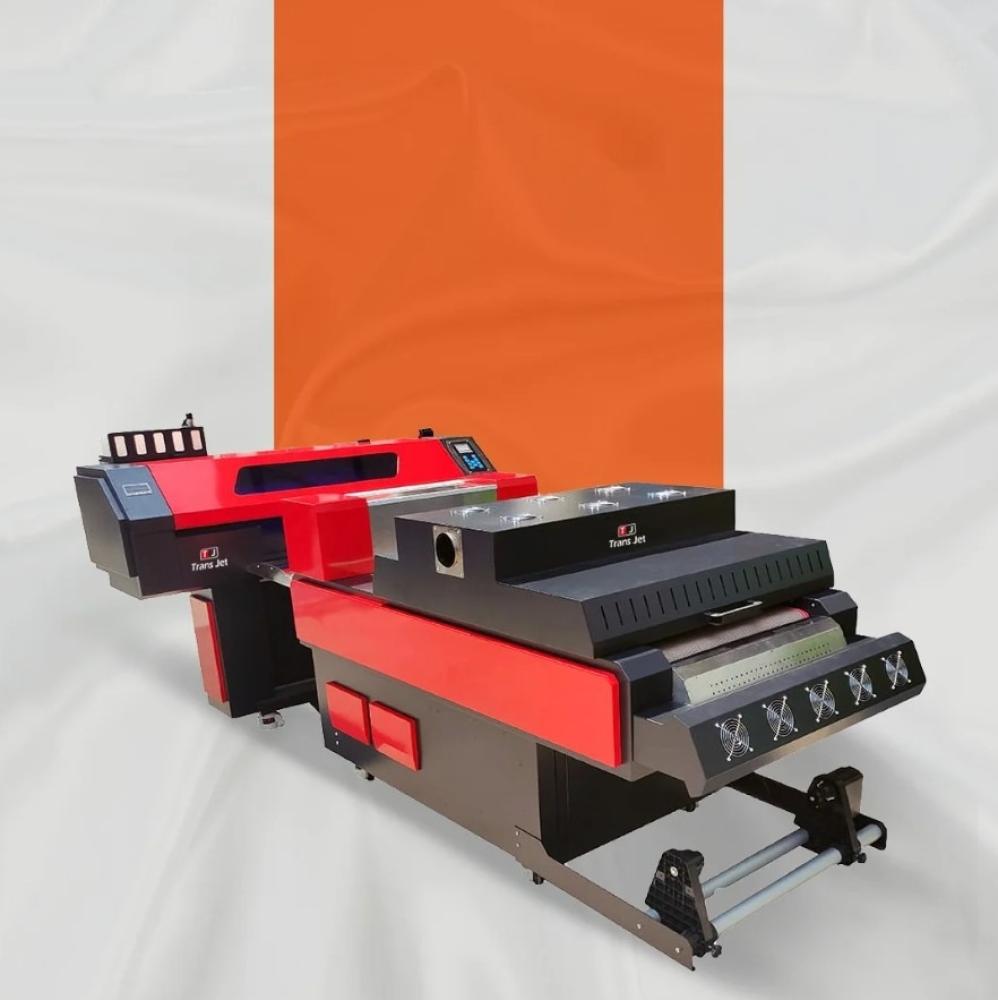
Fabric printing is a digital printing technique that uses heat transfer to apply an image and print it on fabric. It is commonly used to decorate clothing.
Also, printing on fabric is a modern technology that has a major role in improving the appearance of the product, goods, and other works, as it is printed on all types of fabric and all types of leather .
It helps the product come out in the best possible form and does not require much effort, as it is used to transfer from printed paper to fabric on all types of fabrics.
Printing on fabric is divided into two parts:
First, you print the drawings on special transfer paper using the machine
Secondly, use a heat press to transfer the ink on the paper to the active material (fabric).
What is the machine used to print on fabric:
The sub-jet machine is one of the most famous modern types of printing on fabric and clothing. It is a form of modern printing on raw materials that transfers the design to fabric. It is a digital printing technology that allows images to be reproduced from paper to printed on fabric, including clothing and Novelties and solid materials. The most effective material for this sub-jet machine is polyester. It can print directly on fabric or any product that contains polyester. It can also be used with solid materials, as it is considered the leader in printing on fabric and digital printing on fabric.
The most important features of printing on fabric:
Reduce time:
One of the advantages of printing on fabric is that production time is significantly reduced compared to traditional methods.
It is possible to choose any image, then apply the image and print it on the fabric using a heat press, and in the shortest possible time, the product will be produced.
It meets different needs, from simple samples to large production in the fastest possible time.
Reduce waste:
Sally McNeil now: the true story of bodybuilder 'Killer Sally' how long does it take for deca to work naked female bodybuilder pinup girl
Also, printing on fabric can effectively create custom designs or samples can be produced easily and effectively without the need to waste materials.
Flexibility in production:
This machine is quick and inexpensive in both setup and production.
Making it an ideal choice for creating one-of-a-kind custom items or for mass producing a variety of custom products. Furthermore it .
Produces beautiful and lasting colors in fabrics.
High quality :
It provides customers with high quality printing on fabric for all types of clothing and other products, and high quality color stability with repeated washing.
Effort saving:
It saves human effort and does not require a large number of workers compared to traditional methods.
Modern printing:
Printing on canvas has become an integral part of the Internet, and both are in a constant state of development, helping people and companies print on a daily basis, whether for promotion, advertising, teaching, or personal use.
The most important and important features of DTF printing:
It is a new technology for transferring digital printing ink into different shapes and designs to reach the final form.
It is considered one of the highest technology printing presses currently, as it is multi-use and flexible in contrast to traditional methods.
Used in many raw materials:
While direct to garment printing works best on 100% cotton, DTF works on many different clothing materials: cotton, nylon, treated leather , polyester , 50/50 blends, and light and dark fabrics.
Transfers can even be applied to different types of surfaces such as luggage, shoes and even glass, wood and metal.
More durable than other prints:
Although DTF prints don't have the same smooth hand-feel that DTF prints can boast. It is flexible, which means it does not crack or peel off the DTG, but the transfer processes are more durable.
Which makes it good for heavy-use items.
Printing in all colours:
It provides full color, including white ink, which means there is no need to worry.
easy to use :
You can easily use it, and it does not take up much space. It is possible to place it in shops, home, or your office.
Printing on sublimation fabric:
Printing on sublimation fabric is a digital printing process that selects any design from the computer and then implements it on the fabrics. Heat sublimation is done on the fabrics and raw materials.
One of the most important features of printing on sublimation fabric is that the ink is transferred to the fabric with heat. It is permanent and lasts for the longest possible period because the ink is transferred into the material itself, where the printing and the material are one and the same.
Requirements for making a printing project on fabric:
He does not need a large number of workers, he only needs one printing machine and a small number of workers, and it does not matter if he is experienced.
You need other equipment: different colors, materials needed for printing on clothes, organza fabric .
This project requires an area of no less than 150 square metres.
The cloth printing project requires about 10 people to carry out this project, as this provides job opportunities for young people.
It is important that the material you manufacture is of high quality.
It needs good lighting.
Types of printing on fabric:
- First, silkscreen printing :
- It is one of the most common types in the past, as it is fast in the printing process and inexpensive. Silk-screen printing is used for large and small orders, as all types of dark and light fabrics can be used.
- But one of its shortcomings is that it appears to be of poor quality.
- Secondly, direct printing on fabric:
- Direct printing on fabric is considered easy and simple to apply. It is also suitable for T-shirts and all types of fabrics. It is also suitable for large and medium orders. A special printer is used for printing without the need for any other means.
The best types of paper for printing on fabric:
There are two types of papers for printing on fabric. You must use the appropriate and correct type to obtain high-quality results, and it is one of the best types of paper for printing on
Fabric:
- First, transfer paper:
- Transfer paper is characterized by its economical and appropriate price for society.
- It is characterized by high transfer power from ink to fabric with high stability.
- Secondly, sublimation paper:
- The design to be designed is taken from the computer and printed on sublimation paper using a dedicated printer.
For more information, please see the link:
